Nicaragua Real Estate Market 2025
The Definitive Guide to San Juan del Sur & Tola
By Leslie W. Stewart IV | Invest Nicaragua | Updated March 2026
Nicaragua Real Estate Market at a Glance
| Primary Nicaragua Real Estate Market | San Juan del Sur & Tola (Pacific Coast) |
| Foreign Ownership | Yes — same rights as Nicaraguan citizens. No residency required. |
| Market Type | Cash market. Traditional financing extremely difficult for foreign buyers. |
| Home Price Range | $150K – $1M+ |
| Lot Price Range | $25K – $250K+ |
| Closing Costs | ~3% fixed + Transfer Tax (1–7% based on assessed value) |
| Property Taxes | Very low. Rarely exceeds $1,000/yr for a single-family home. |
| Transactions In | USD |
| Typical Closing Timeline | ~30 days from Private Sales Agreement execution |
| Full Buying Process | First-Time Buyer’s Guide → |
September 2026 update: We have published our Nicaragua Real Estate Market Update 2026, which grades the breakout-year prediction in this report against actual mid-year results: tourism revenue up 40%, Canadian arrivals up 37%, and our closings doubled. For how transactions are completed with the buyer or seller abroad, see Buying Property in Nicaragua Remotely.
The 2025 Market at a Glance
If you’re looking at buying real estate in Nicaragua in 2026, you need to understand what happened in the Nicaragua real estate market in 2025. With over a decade of experience closing transactions across every property type and price range on Nicaragua’s Pacific coast, we’re going to give you everything you need to know right here — the real numbers, the trends, the opportunities, and the honest risks.
But if we had to name the single most important thing a buyer needs to know about 2025, it’s this: one of the largest infrastructure projects in Nicaragua’s history is essentially complete. The Costanera — a $400 million+ Pacific coastal highway funded by Central American Bank for Economic Integration (CABEI) — now connects all of the beaches of San Juan del Sur to all of the beaches of Tola and beyond.
What Shaped the Nicaragua Real Estate Market in 2025
The first half of 2025 was defined by global uncertainty. US interest rates remained elevated. Stock markets were volatile. Tariff policy was in flux. Crypto swung wildly. And multiple ongoing conflicts — the Russia-Ukraine war, the situation in Gaza, and tensions across the Middle East — created a backdrop of anxiety for buyers worldwide — and the Nicaragua real estate market was not immune to the sentiment.
Nicaragua is a cash market. Traditional bank financing is extremely difficult for foreign buyers to obtain — the vast majority of transactions close in cash. So rising interest rates didn’t directly affect financing, but they affected psychology. Buyers who were sitting on capital became more deliberate. The emotional, move-fast energy that characterized the COVID-era market gave way to more analytical, value-driven decision-making. For more on how the buying process works, see our First-Time Buyer’s Guide.
On the macro front, Nicaragua’s economy provided a supportive backdrop. According to the Banco Central de Nicaragua, GDP growth reached approximately 3.9% in the first half of 2025 and accelerated to 6.8% in Q3, with the full year estimated in the 4.5–5.0% range. Inflation slowed to approximately 2.7%, preserving purchasing power. International reserves exceeded $6 billion, and the country’s stable zero-devaluation monetary policy continued to reinforce investor confidence. The IMF projects 3.5% growth for 2026 — a moderation, but still firmly positive.
Despite fewer transactions in the first half of the year, average deal sizes held steady. Serious buyers kept buying. What changed was the type of conversation we were having with clients.
Early in 2025, the uncertainty made people cautious. But by the end of the year, the conversation shifted. Buyers began leading with lifestyle over pure ROI. Whether it was safety concerns in the United States — including the increasing frequency of school shootings and street-level violence driven by the fentanyl crisis — or political upheaval in Canada, or the reverberations of war in Europe, we saw a distinct uptick in what we call “return on experience” (ROE) buyers: people motivated not just by financial returns, but by the quality of life that Nicaragua offers — reshaping who enters the Nicaragua real estate market and why.
And then Q4 arrived. Inquiries surged. Deals that had been lingering closed. The momentum has carried straight into 2026, which is shaping up to be one of our most active starts to a year in recent memory.
Market Performance: Prices, Inventory, and Demand
We like to compare the Nicaragua real estate market to the NASDAQ. If you look at a 10-year chart, it’s up and to the right. You might see a flat year or a dip in any given period, but the long-term trajectory has been steady, organic appreciation — without the speculative surges and corrections that have plagued more developed markets.
COVID was a significant inflection point. Nicaragua was introduced to a wave of buyers seeking places without lockdowns or restrictions. That snowball has continued to build. Over the past five years, our annual transaction volume has risen year over year, even in 2025 — a year when global headwinds hit the pause button, not the stop button.
Buyers are increasingly targeting the $200K-$500K range for turnkey homes. The luxury segment above $500K is real and growing, with multiple seven-figure transactions closing in recent years.
Based on our experience, well-located properties in San Juan del Sur and Tola have appreciated at a steady, single-digit annual rate — with the coastal highway expected to accelerate that trajectory in specific corridors.
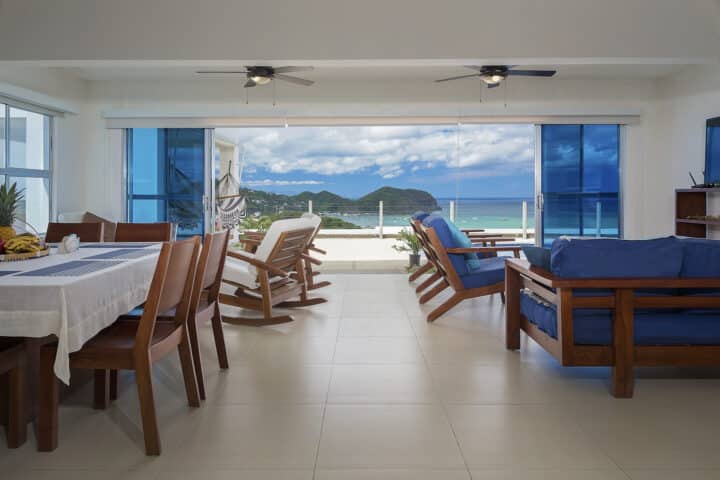
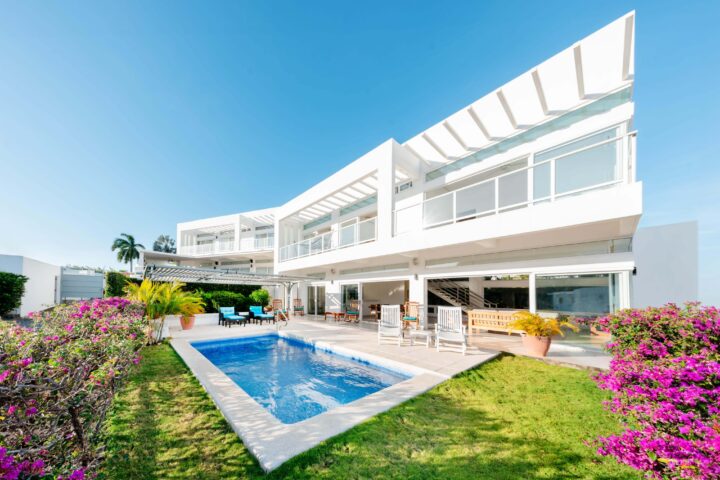
Modern Luxury Oceanview Home

Luxury Oceanview Condo in Town
Why Sellers Are Holding Firm
One of the defining characteristics of the Nicaragua real estate market is that an estimated 90% of property owners own outright in cash. There is no pattern of distressed sales.
Sellers have watched the coastal highway transform accessibility, seen tourism numbers climb, and experienced the growing demand firsthand. They know what they have, and they’re pricing accordingly.
This dynamic is fundamentally different from leveraged markets where interest rate shifts can force sellers to capitulate. In Nicaragua, prices are sticky upward. The coastal highway hasn’t caused prices to spike overnight, but it has hardened current asking prices and allowed new listings to command more. If you owned property before the highway was built, you’re holding something demonstrably more valuable.
It’s also worth noting that construction costs have risen noticeably over the past several years. Inflation in materials and labor has pushed new-build costs higher relative to purchasing existing homes, which is another factor supporting prices in the resale market and influencing buyers toward turnkey properties.
Inventory: Tight Where It Matters
- Move-in-ready homes (3-4 bed, ocean view, pool) are low inventory and sell quickly
- Properties sitting longer share common traits: dated construction, deferred maintenance, overpriced
- Land remains accessible, especially for buyers planning to build
- The $500K to $1M+ segment of the Nicaragua real estate market has even thinner inventory
Who’s Buying: The Four Buyer Profiles
Across our years of brokerage activity in San Juan del Sur and Tola, we see four distinct buyer profiles driving the Nicaragua real estate market today.
1. The Investor
ROI-driven buyers looking to diversify their holdings beyond traditional markets. They’re typically bullish on Central America, believe Nicaragua is positioned to follow Costa Rica’s growth trajectory — a view echoed by Travelbinger, which described Nicaragua as “set to become the next Costa Rica” — and want to get in early. Their focus is rental income, appreciation, or both. Many have exposure to equities and crypto and see Pacific coast real estate as a hard-asset hedge.
2. The Relocating Family
This is the fastest-growing segment. Families driven by a desire for a higher quality of life: safety, lower cost of living, access to quality English-based internationally accredited education, farm-to-table food, warm weather, and escape from the political tension and media-fueled anxiety of their home countries. San Juan del Sur now has two internationally accredited schools offering English-based curricula, and the coastal highway makes both school locations easily accessible.
Homeschooling is also a popular option for many families. Even for those not enrolled in formal schooling, the large and growing community of families in San Juan del Sur and Tola makes it an exceptional environment for raising kids at any age.
3. The Retiree
Retirees share many motivations with families but place an even greater emphasis on affordability. Social security and pension income stretches dramatically further here than in Florida, California, Vancouver, or most of Europe. Access to affordable healthcare — both public and private — is a major draw. US citizens can have Social Security deposited directly into a Nicaraguan bank account via the SSA’s International Direct Deposit program. And the community of retirees already established in San Juan del Sur and Tola means newcomers aren’t starting from zero.
4. The Digital Nomad and Remote Worker
Remote workers making a US, Canadian, or European salary while living in Nicaragua are, frankly, the biggest financial winners in this market. Nicaragua operates a territorial tax system — foreign-sourced income is not taxed locally. Combined with the dramatically lower cost of living, a remote worker earning $60K-$100K/year lives a lifestyle here that would require $250K+ in a major North American city.
San Juan del Sur and Tola have excellent internet connectivity — hardline fiber and fiber-over-satellite options — and many properties are equipped with solar backup systems and generators to ensure uninterrupted connectivity even during grid maintenance. These buyers want modern, aesthetically pleasing properties with ocean views that reflect the success they’ve built — and at a fraction of what equivalent properties cost back home or in neighboring countries.
The Plan B Buyer
Cutting across all four profiles is a growing subset we call the “Plan B” buyer. These are people who may not be relocating today but want diversification — both financial and physical. They’re buying a rental property that generates income now but could become a personal residence if conditions at home deteriorate. COVID and current world events have taught the world that plans can change overnight, and many buyers are building optionality into their strategy — and the Nicaragua real estate market offers exactly that combination of income potential and lifestyle backup.
Canadian Buyers: A Notable Trend
Canadian buyers have grown as a share of our client base every year since COVID. The roots of this trend trace back to 2020–2022, when Canada implemented some of the strictest lockdown measures in the Western hemisphere. In February 2022, the federal government invoked the Emergencies Act during the Freedom Convoy protests, freezing approximately 210 bank accounts — an action a federal court later ruled unconstitutional. These events heightened concerns among many Canadians about financial sovereignty and personal freedom, and Nicaragua — a country that never imposed vaccine mandates or lockdowns — became a destination of interest, and the Nicaragua real estate market saw a direct uptick in Canadian buyers.
There’s also a simpler factor: Canadian winters. For snowbirds seeking warm-weather escapes, Nicaragua offers a dramatically more affordable alternative to traditional destinations like Mexico or Costa Rica, with direct flight access and a welcoming community. Since then, the pipeline has been self-reinforcing: Canadians visit, love it, and tell other Canadians.
Repeat Buyers: The Strongest Market Signal
We regularly work with past clients returning for their second or third property. Some are buying adjacent lots to protect the area around their existing home. Others are acquiring land or additional existing homes because they see long-term appreciation potential. Every repeat buyer is telling us the same thing: they’re happy with their initial investment, confident in the country’s trajectory, and want to increase their exposure.
It’s also a testament to the high-trust relationships we build with each client. Throughout the property search and buying process, we walk hand in hand with our clients to ensure their transaction is seamless and professionally managed. This trust and experience allows us to deepen relationships and advise clients on continued and evolving property journeys in the Nicaragua Real Estate Market.
Nicaragua vs. Costa Rica: The Value Proposition
This is the comparison every buyer considering Central America needs to see. The question isn’t whether Costa Rica is beautiful — it is. The question is whether the premium you’re paying still makes sense.
For buyers comparing options, the Nicaragua real estate market presents a compelling alternative.
| Nicaragua (SJDS / Tola) | Costa Rica (Guanacaste) | |
|---|---|---|
| 3BR Ocean View Home | $250K – $500K | $500K – $700K+ |
| Beachfront Condo (2BR) | $150K – $250K | $350K – $500K+ |
| Cost of Living (monthly) | ~$735 avg | ~$1,257 avg |
| Cost of Living vs. US | ~70% cheaper | ~45% cheaper |
| Mandatory Healthcare Fee | None | $100-$300/mo (CAJA) |
| Foreign Income Tax | None (territorial) | None (territorial) |
| Market Maturity | Early-stage / appreciating | Mature / correcting |
| Price Trajectory (2024) | Steady appreciation | 36% correction in Guanacaste |
| Tourism Feel | Authentic, uncrowded | Developed, tourist-heavy |
| Safety | Lowest violent crime rate | Rising crime rates 2023-2024 |
Sources: Global Property Guide, TheLatinvestor, Expatistan, LivingCost.org, INIDE Nicaragua, CAJA Costa Rica
What Buyers Tell Us about the Nicaragua Real Estate Market
When buyers come to us after spending time in Costa Rica, the reaction is consistent: shock at the price difference. Many have been looking at Guanacaste for years and say the same thing — “we wanted to buy in Costa Rica, but the prices are just out of control.”
Beyond pricing, buyers frequently note that Costa Rica feels oversaturated. The warmth and authenticity of the local culture has been diluted by overdevelopment. Nicaragua, by contrast, still feels like a different country — raw, beautiful, and genuinely welcoming. The beaches of San Juan Del Sur & Tola aren’t crowded. The restaurants aren’t charging Miami prices. And the community hasn’t been homogenized by mass tourism.
In concrete terms: a 3–4 bedroom home with a beautiful ocean view within 10 minutes of the beach costs between $250K and $500K in Nicaragua. The equivalent property in Costa Rica starts at $500K–$700K and often exceeds that. And in Costa Rica, you’re also contending with mandatory CAJA healthcare contributions ($100–$300/month for all legal residents), higher grocery and dining costs, and a market that’s already experienced a significant correction — Guanacaste saw a 36% price drop in 2024 after a pandemic-fueled surge of up to 400%.
Nicaragua’s appreciation, by contrast, has been gradual and organic. No speculative surge means lower correction risk. The fundamentals — cash buyers with no debt, limited new-build supply, growing demand — support continued, sustainable growth. Smart buyers evaluating the Nicaragua real estate market are asking the right question: do you want to buy at the top of the growth curve, or get in where Costa Rica was 20 years ago?
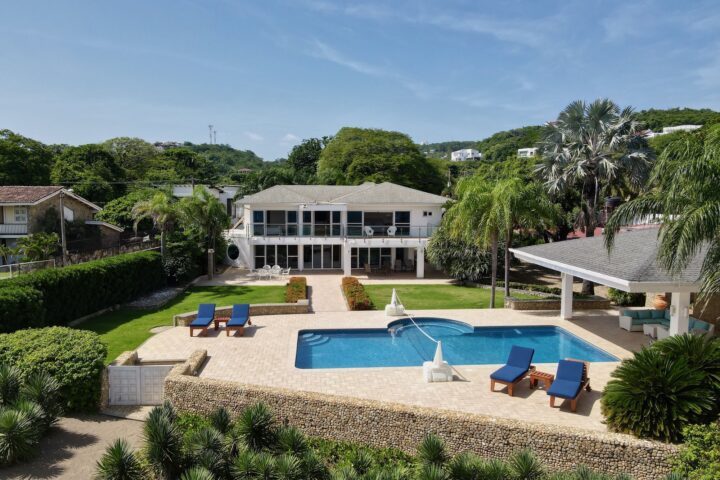
Casa Serena Beachfront Home
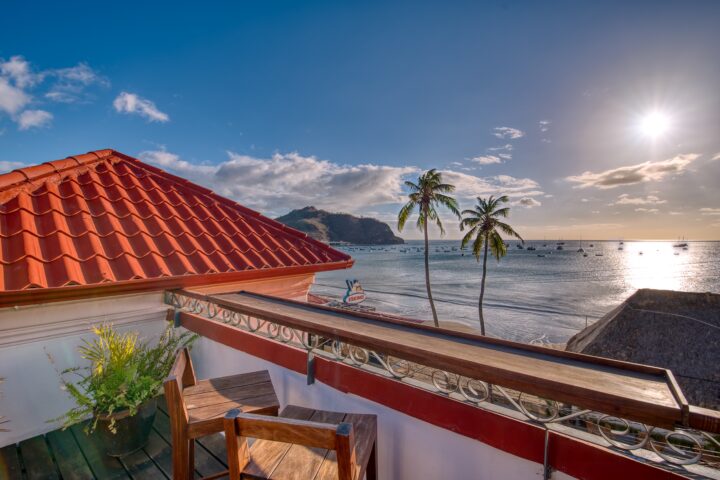
Beachfront Hotel with Adjacent Properties
The Infrastructure Story: Why Everything Just Changed
The Costanera: $400M+ and Nearly Complete
The Costanera is the single largest infrastructure investment in Nicaragua’s recent history. Funded by a $382.6 million loan from CABEI, this highway runs from El Naranjo at Nicaragua’s southernmost Pacific point up through San Juan del Sur and Tola, connecting to the Managua corridor. The purpose is straightforward: connect dozens of beaches along the Pacific coast with a modern, paved highway — complete with lookout points, running paths, bike lanes, and sidewalks.
The impact on daily life is already dramatic. Destinations that used to take 30 minutes now take 15. The drive from Rancho Santana to San Juan del Sur has gone from 90 minutes to under 45. Areas that required a 4×4 vehicle are now accessible via paved roads.
People in San Juan del Sur can take a short drive to Hacienda Iguana or Guacalito de La Isla to play a round of golf. The entire corridor functions as one connected market for the first time.
Long-term plans include a dedicated tourist border crossing at El Naranjo, allowing seamless travel between Nicaragua and Costa Rica specifically for tourists — separate from the current commercial crossing at Peñas Blancas.
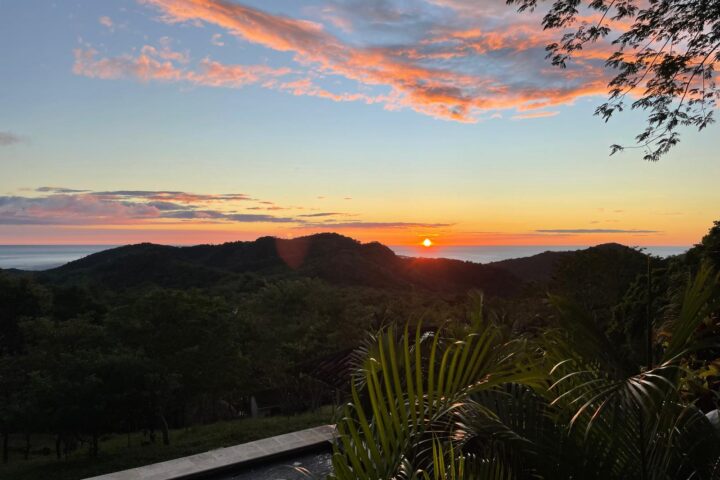
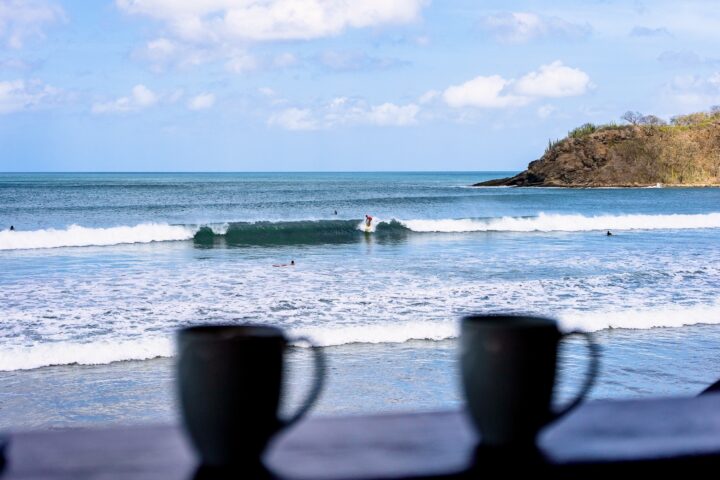
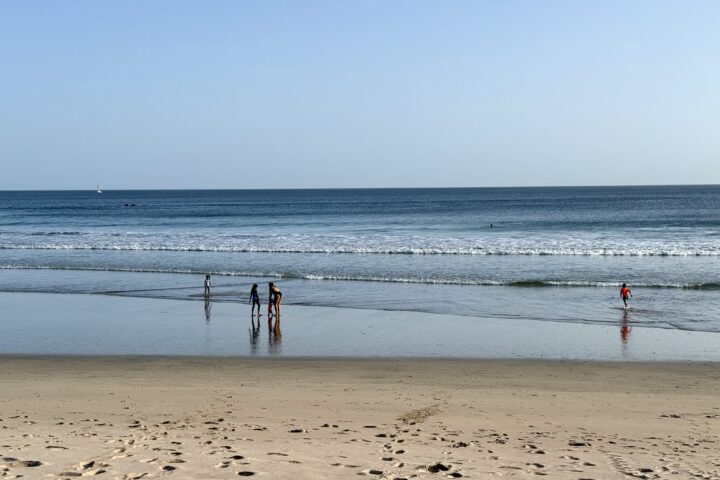
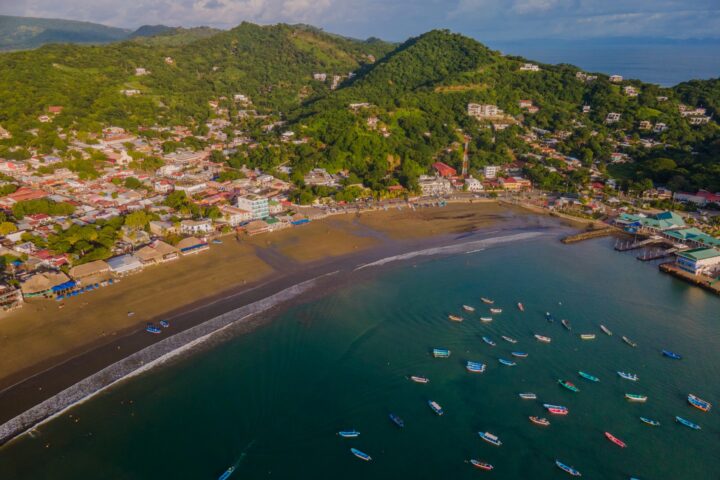
San Juan del Sur and Tola – Nicaragua Real Estate
Beyond the Highway
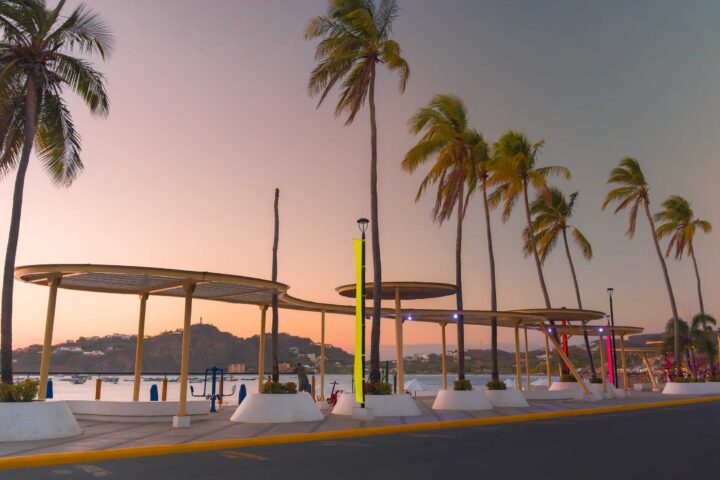
Leading up to the construction of the new coastal highway, the Pan-American Highway between Managua and the Rivas area received a major upgrade with fresh paving, new sidewalks, and landscaped roundabouts — Nicaragua is widely regarded as having one of the smoothest stretches of the Pan-American Highway in the region. San Juan del Sur saw a completely new promenade, a remodeled central park, and a beautified town entrance. New supermarkets (Ocean Market, Ahorra Más) have opened. Rivas gained a La Colonia. The Augusto C. Sandino International Airport in Managua is undergoing modernization. And the forthcoming Punta Huete International Airport, expected to open in 2028, promises to dramatically expand air connectivity to the Pacific coast.
The scale and speed of execution caught everyone off guard. What was announced as a multi-year project has materialized rapidly, and the quality of work — from the road surface to the signage to the coastal lookout points — has exceeded expectations. As one LA Times special report on Nicaragua noted in January 2026: “Infrastructure upgrades and a resilient macroeconomic foundation are positioning Nicaragua as one of the region’s most compelling long-term investment frontiers.”
A More Professional Nicaragua Real Estate Market
Nicaragua has implemented a formal real estate brokerage law, requiring broker and agent registration, clearer documentation, and government oversight. This legislation represents a meaningful step toward a more transparent, professional property market — particularly in high-activity coastal markets where foreign buyers and higher-value transactions benefit from standardized processes. Invest Nicaragua operates under INVUR License #0024-2023.

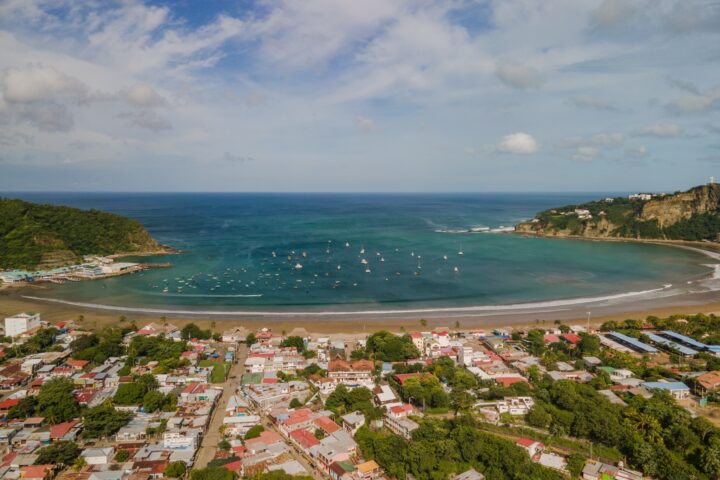
Tourism Tailwinds: What’s Driving the Nicaragua Real Estate Market
Tourism growth and the Nicaragua real estate market are directly correlated. More visitors means more rental demand, more rental income, and more buyer confidence. Tourist spending hit record levels in Q4 2025, with North American tourists averaging $71.10/day over 13-day stays and European visitors spending $67.10/day over 13.4-day stays. These are not budget backpackers — these are travelers spending real money.
San Juan del Sur, Tola, Granada, and Corn Island hit 100% hotel occupancy on peak dates in 2025. For property owners, this translates directly to rental performance. But strong rental performance is not automatic — it requires professional property management and operational discipline.
The organic marketing flywheel is powerful: every visitor who comes to Nicaragua takes photos, posts them on social media, and tells friends. Nicaragua is still genuinely new to many travelers — and in a world where everyone has been to Mexico and Costa Rica, being the undiscovered destination creates enormous word-of-mouth momentum. The country’s tourism department is also actively expanding into Asian and Middle Eastern markets, introducing Nicaragua to billions of potential travelers who haven’t yet considered Central America.
Running a rental property is running a business. The best-performing rentals aren’t the most expensive homes — they’re the best-managed ones.
Nicaragua Real Estate Market 2026
Based on over a decade of brokerage experience on Nicaragua’s Pacific coast, we believe the Nicaragua real estate market — particularly San Juan del Sur and Tola — is set for a breakout year in 2026. Several catalysts are converging simultaneously:
Externally: Ongoing global conflicts, inflation, rising cost of living, political polarization, and declining quality of life in traditional home markets continue to push people outward. Every month that conditions in North America, Europe, and the Middle East feel less stable, more people start looking for alternatives. Two of the prime expat destinations, Mexico and Costa Rica, have become less attractive due to rising prices and crime. Nicaragua benefits directly from this trend — it’s affordable, safe, warm, and welcoming, with none of the overdevelopment or price inflation of more established destinations. The high quality of life vs the low cost of living in Nicaragua is non-comparable to the more established and well known destinations.
Locally: The coastal highway is transforming accessibility. A new international school, Tambran International School, in addition to the internationally accredited San Juan Del Sur Day School have expanded education options. Amenities are improving across the board. The early 2026 pipeline is markedly stronger than early 2025 — more offers, more closed transactions, and a higher volume of serious inquiries. Historically, strong momentum in Q1 carries through the year.
Where We See the Best Value
The $300K–$450K range is the sweet spot. At this price point, you can secure a beautiful 3–4 bedroom home with an ocean view, a pool, good accessibility, and modern or recently updated finishes. These properties are attractive to both relocating families and rental investors, and inventory in this segment is tight. When a well-priced home in this range hits the market, it tends to move quickly.
For buyers with a smaller budget, the $150K–$250K range offers compelling options — including beachfront condos and smaller homes that would be unimaginable at that price point anywhere else in the hemisphere.
We’re also seeing increased demand for properties on larger parcels slightly further from town — a trend directly enabled by the coastal highway. When it’s 15 minutes to everything on a beautiful paved road, being outside of town is no longer a compromise. Families wanting space for a guest house or a small farm, and entrepreneurs looking to develop surf or yoga retreats, or digital nomad compounds, are finding excellent opportunities in this category.
The Biggest Risk
The biggest risk isn’t the market — it’s buying the wrong property for the wrong reason. Before purchasing, you need to clearly define your goals, use our 5 Expert Tips for Success as a guide. Are you buying for rental ROI? For personal relocation? As a long-term land hold? For a Plan B escape option? Your answer dictates the property you should buy.
An ROI-driven buyer shouldn’t select a property based on personal taste alone — the market determines what rents well. A relocating family doesn’t need to obsess over rental yield if they’re planning to live in the property full-time. And every buyer should think about exit liquidity: if life changes and you need to sell, will this property appeal to the broader market? Avoid over-customizing a home so specifically to your taste that future buyers can’t see themselves in it.
On Timing
Due to low inventory, especially in the desirable home segment: if you find a property that matches your criteria and you’re in a position to act, act swiftly. You are not the only buyer looking at that home. The property you love today may not be available in six months. There is no large-scale development pipeline currently producing 10 or 20 homes at a time in San Juan del Sur or Tola — inventory comes from individual resales, which means supply is inherently limited.
And if you’re not ready to buy today, come visit. Take a trip to San Juan del Sur and Tola. Rent a car. Drive the coastal highway. Explore the beaches of San Juan Del Sur, restaurants, and developments. Figure out which area fits your life. Even if you’re year(s) away from purchasing, having boots on the ground will make you a more informed and faster-moving buyer when the time comes. The worst that can happen is a beautiful, affordable vacation.
The Bottom Line on the Nicaragua Real Estate Market
Nicaragua is not Costa Rica ten years ago. It is something different: a market with its own trajectory, advantages, and risks. The coastal highway has fundamentally changed the Pacific coast. If you find a property that matches your criteria and you are in a position to act, act swiftly.
Frequently Asked Questions
Below are the most common questions we receive from buyers exploring the Nicaragua real estate market. For comprehensive answers, visit our FAQ page and our First-Time Buyer’s Guide.
Can foreigners own property in Nicaragua?
Yes. Foreigners have the same property rights as Nicaraguan citizens. You do not need to be a resident, and you can purchase property with just a passport and the funds to buy. The only restriction is that foreigners cannot own property within five kilometers of the Costa Rican or Honduran border.
How does the buying process work?
The process is straightforward: choose a licensed real estate agent, visit Nicaragua (or schedule virtual tours) and view properties, submit an offer with a $1,000 earnest deposit, execute a Private Sales Agreement, hire a Nicaraguan lawyer for due diligence, make a 10% deposit into escrow, complete due diligence, send the remaining 90%, and close. The typical timeline from PSA to closing is approximately 30 days. We, at Invest Nicaragua, will guide you throughout this process from start to finish.
What are the closing costs?
Approximately 3% in fixed fees (1% municipal income tax, 1% registration fee, 1% legal fee) plus a Transfer Tax based on the assessed value of the property, which ranges from 1% (under $50K) to 7% ($500K+). Budget an additional ~$1,000 for miscellaneous fees (escrow, wire fees, expedited registration). The real estate commission is paid by the seller, not the buyer.
Is financing available?
Traditional bank financing is extremely difficult for foreign buyers in Nicaragua. The market operates primarily on cash. On a case-by-case basis, some sellers may offer owner financing, typically requiring a minimum 50% down payment with the balance paid over 1-2 years.
What about property taxes?
Property taxes in Nicaragua are very low by North American standards and paid annually in arrears. It is rare that property taxes surpass $1,000 annually for a single-family home. This is one of the most pleasant surprises for buyers accustomed to high property taxes in the US or Canada.
What is the cost of living like?
Nicaragua’s cost of living is approximately 47% cheaper than Costa Rica and 70% cheaper than the US. A comprehensive cost breakdown is available in our Guide to the Cost of Living on the blog.
Who will manage my property if I'm not in Nicaragua?
There are excellent property and rental management companies in both San Juan del Sur and Tola. Property management typically costs $100-$150/month, and rental management is generally 20-30% of produced income. We connect all of our buyers with qualified management teams.
“Leslie made our search for the perfect property to create our hotel a seamless experience. We made several trips to Nicaragua and each time our itineraries were full with dozens of properties in different regions of the country that we vetted together prior to visiting. We would not have had the confidence to move forward with our investment without Leslie's guidance and expertise. Even after the sale, we continue to rely on Leslie for general advice on all things Nicaragua and always look forward to getting together with him and his amazing family every time we visit.”
“Leslie is a consummate expert realtor, a great communicator, a nice guy, and very easy to work with. Plus, and most importantly, he gets results. My home sale was a very smooth transaction and absolutely trouble-free. I truly cannot recommend him enough!”
“Leslie did a great job for us when we bought our beach condo and our single home in Colinas de Miramar in San Juan del Sur. He was very thorough and easily facilitated the transaction – seeing us through the entire process, start to finish. Leslie was there at all stages from showing us the property to coordinating with the sellers to concluding with the closing process. He also followed up with us after both sales and kept in touch. We would highly recommend him for any real estate transaction.”
“Leslie and Belkys were my first contact in Nicaragua and they were a great influence in my decision making when it came to where to invest in Nicaragua and purchase my first Hotel. Leslie and Belkys were always there to answer my phone calls whenever I needed advice even after the closing. They also helped me with other contacts that I needed to set up my company and for all other needs as a newcomer to Nicaragua. It was a pleasure working with them and I will continue to use their services and advice for all my other real-state needs.”
“I have worked directly with Leslie and Belkys on 5 transactions in Nicaragua on both sides of the table, including buying and selling properties and businesses. I have also sought advice from the Invest Nicaragua team on a multitude of other business dealings and investments here in Nicaragua. When in doubt, when I'm confused, when I'm frustrated when I'm looking to evaluate the viability of investments and think through things, Leslie is the first person I visit. I continue choosing to work with the Invest Nicaragua team because they are the most curious, thorough, honest, thoughtful, and hardworking team on the block. If you're thinking about investing in Nicaragua or purchasing property in Nicaragua, look no further, this is the guy you want in your corner.”
“Leslie assisted us to find the ideal piece of land in Nicaragua. On giving Leslie our criteria we didn't waste time visiting properties that didn't fit our needs, viewing was always a pleasure with Leslie with his very kind & knowledgeable manner. On finding the property Leslie made the sale process seamless & helped us to settle in very well. Leslie also sold this property for us a few years later within 5 months of listing the property, making the whole experience run very smoothly. I would highly recommend Leslie to anyone who is looking to buy real estate in Nicaragua.”
Ready to Explore?
I came to Nicaragua as a Peace Corps volunteer in 2011 and never left. After more than a decade of living here, raising a family, and building a brokerage from the ground up, I can say with confidence that there's no better place to invest in your future. Our bilingual team of agents all live full-time in San Juan del Sur and Tola — and every one of us is an active property owner and investor in the market we serve. We don't just sell real estate here. We live it. We've facilitated hundreds of transactions, and we love sharing what we've learned — both professionally and personally — with people who are curious about investing in or relocating to Nicaragua. We can't wait to see you at the beach.
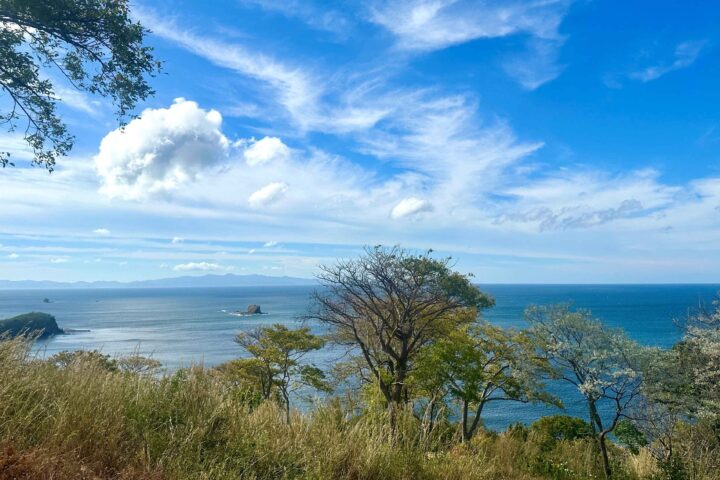
Lot Near Playa Tamarindo
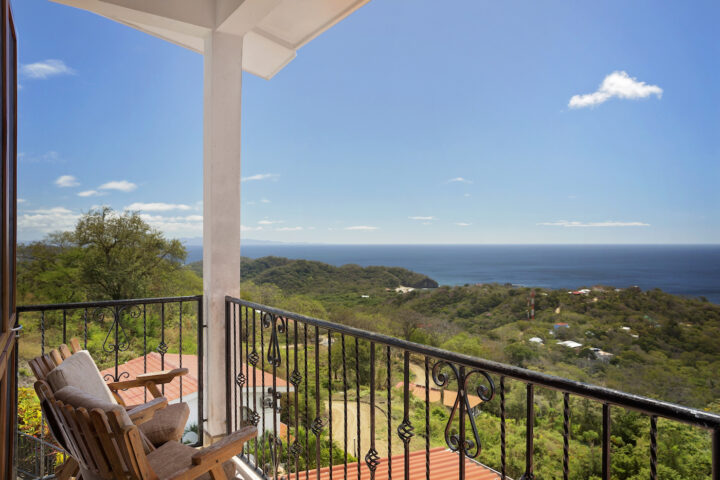
Surf House at Playa Maderas
Sources
All data cited in this report is sourced from the following: Instituto Nicaraguense de Turismo (INTUR) — 2025 tourism data and 2026 projections | Instituto Nacional de Informacion de Desarrollo (INIDE) — Q4 2025 International Tourism Survey | Banco Central de Nicaragua — GDP growth, inflation, and macroeconomic data (2025) | International Monetary Fund (IMF) — 2026 GDP growth projection for Nicaragua | Latina Republic — Nicaragua Reports Positive Tourism Indicators for Fourth Quarter 2025 (Feb 2026) | Los Angeles Times (One World Media Special Report) — Unlocking Nicaragua’s Next Wave of Economic Expansion (Jan 2026) | Central American Bank for Economic Integration (CABEI) — Costanera Highway financing | Global Property Guide — Costa Rica residential property market analysis (2025) | TheLatinvestor — Costa Rica real estate market reports (2025-2026) | Expatistan — Cost of living comparison, Nicaragua vs Costa Rica (2025) | LivingCost.org — Cost of living comparison data | Travelbinger | U.S. Social Security Administration — International Direct Deposit country list | Invest Nicaragua brokerage data — Market observations based on over a decade of transaction activity