How to Buy Property in Nicaragua
Buyer's Guide
Rich with a vibrant culture, friendly locals, endless beaches, and year-round warm weather, Nicaragua is the perfect place to take a vacation – but have you thought about buying property here? Whether you want to buy a home, start a business, or purchase an investment property, you’ve come to the right place. We’ve been helping foreign buyers navigate the Nicaraguan real estate market since 2014, and this guide walks you through every step of the process.
Are you a remote worker looking to hear the ocean waves while you work? A family that wants a higher quality of life with a drastically lower cost of living? Or simply looking for a straightforward income-producing rental property? Our Nicaragua Real Estate Buyer’s Guide: 5 Expert Tips For Success is a great starting tool to help you identify the key pillars of your property search.
Read on for the detailed, step-by-step process to buy property in Nicaragua — one of the fastest-growing real estate markets and tourist destinations in Central America. For a detailed look at current pricing trends, transaction volume, and where the market is heading, check out our 2025 Nicaragua Real Estate Market Report.
Nicaragua Real Estate Buyer's Guide
Who Can Buy Property in Nicaragua?
In most countries, you have to be a citizen or a resident to own property. Fortunately, Nicaragua is different. You don’t have to be a citizen of Nicaragua to own property here. You don’t even have to be a resident. People from the United States, Canada, Latin America, and Europe own property in Nicaragua even though they are not from here nor live here full-time.
Foreigners have the same property rights as Nicaraguan citizens — this is one of the things that makes Nicaragua uniquely attractive compared to other Central American countries that impose ownership restrictions on non-citizens.
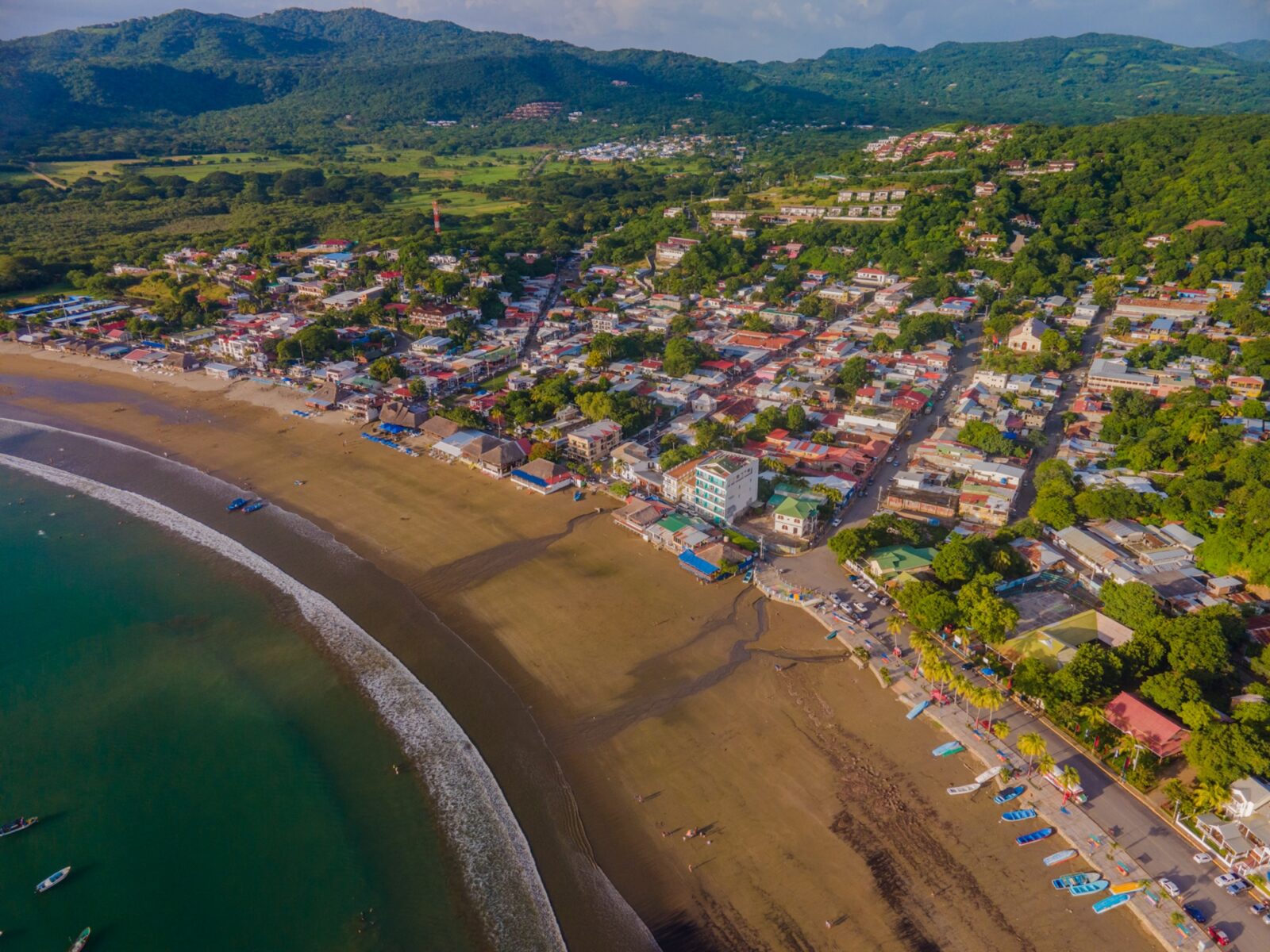
How Does Property Ownership Work in Nicaragua?
You can buy property in Nicaragua outright in your name almost anywhere in the country via a fee simple title. You can acquire the property as an individual or with a Nicaraguan corporation (Sociedad Anónima or S.A.), as well as with a foreign entity, whether it’s an LLC, corporation, an IRA, or trust.
Can I Buy Property Anywhere in Nicaragua?
There is only one restriction: foreigners cannot own property within five kilometers of the Costa Rican and/or Honduran border. Beyond that, there are no restrictions on where or what type of property a foreigner can purchase.
Do I Have to Be a Resident of Nicaragua to Own Property Here?
No. You do not need to be a resident before or after you buy property in Nicaragua. Owning property does not require you to become a resident of the country.
Should I Become a Resident of Nicaragua?
Now that you know you don’t have to become a resident — what if you want to? Will owning property make that easier? Generally speaking, yes.
If you are purchasing property for your primary residence or vacation home, this can improve your chances of obtaining residency. Purchasing a business or acquiring a property that will generate income will further facilitate the residency application process. There are different types of residency categories (e.g., investor, retiree, etc.), and each has its own requirements and incentives. Based on your property and plans in Nicaragua, a local lawyer can help you decide which type of residency best suits your needs.
How Can I Find the Perfect Property to Buy in Nicaragua?
You need an experienced real estate agent that is familiar with Nicaragua, specifically the area where you plan to purchase. A realtor with a firm grasp of the local real estate market, language, customs, and legal process will make purchasing property much simpler.
Unlike the United States or Canada, Nicaragua does not have an MLS (Multiple Listing Service). There is no centralized database of properties for sale. This means your agent’s local knowledge, relationships, and access to off-market inventory are critical — it’s not something you can effectively navigate from a laptop abroad.
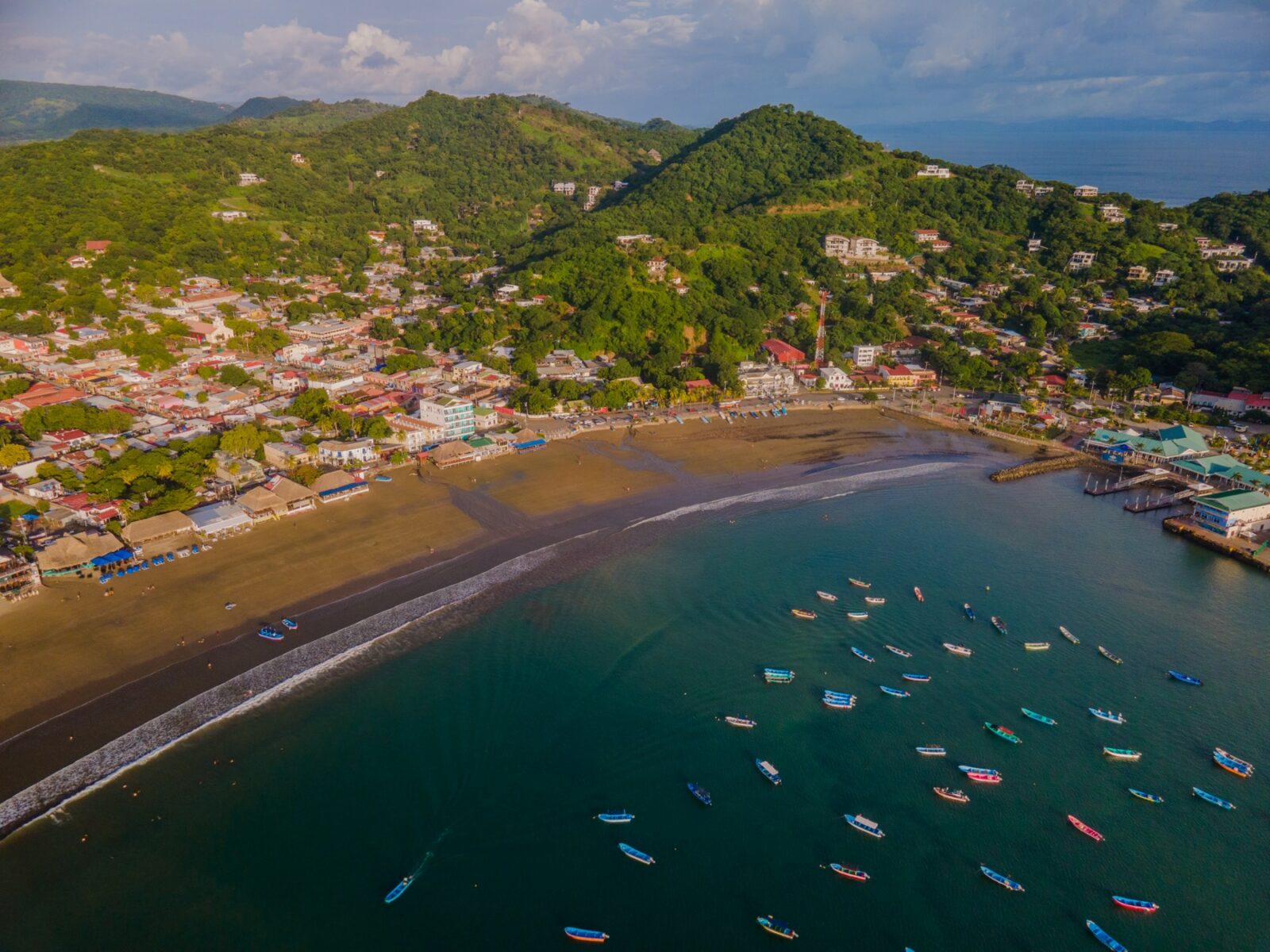
Why Work With a Licensed Local Brokerage?
Look for a licensed agent. Nicaragua’s real estate regulatory body is INVUR (Instituto de Vivienda Urbana y Rural), and all legitimate brokerages should carry an INVUR license. This ensures you’re working with someone who is registered, accountable, and operating within Nicaraguan law. Invest Nicaragua holds INVUR License 0024-2023.
As an independent, INVUR-licensed brokerage, Invest Nicaragua guides foreign buyers through the entire process — property search, legal due diligence, escrow, closing, and residency — so you have one trusted team from your first viewing to holding title.
Beyond our many years of experience as real estate agents, Invest Nicaragua also actively invests in the real estate market here. We keep our fingers on the pulse of the best deals and opportunities currently available in the markets of San Juan del Sur and Tola.
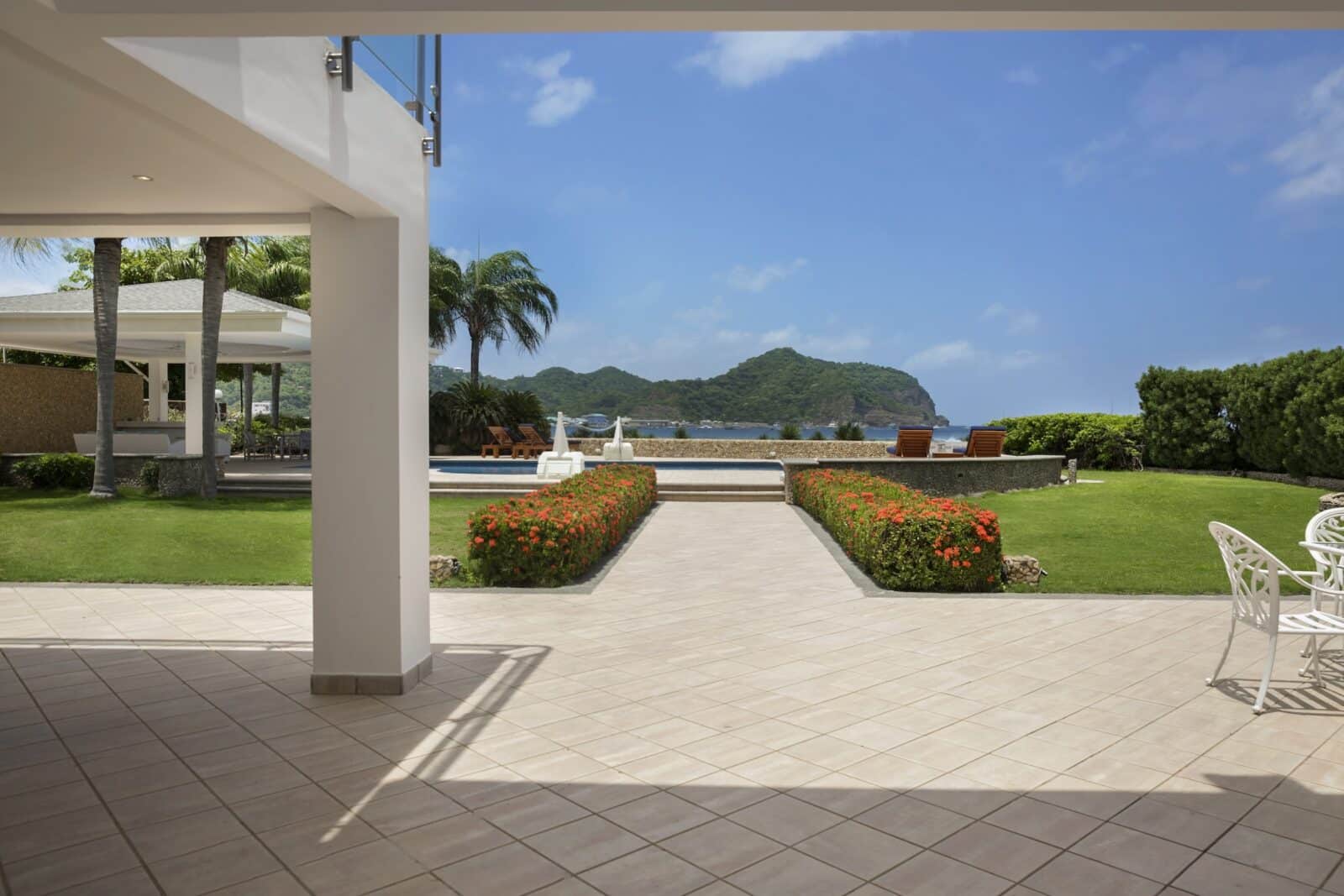
Think about how you choose a doctor, an accountant, a mechanic — you look for an expert, someone who knows what they’re doing and someone you can trust. Real estate is no different, and the stakes are higher when you’re in a foreign country, working in another language, under a different legal system for property. You want people who know that system inside and out, who have real transaction experience, and who have been through it themselves as investors — not just as agents.
The reality is you’re probably not the expert here — and that’s fine. Maybe you’ve done many deals back home; maybe this is your first, second, or third in Nicaragua. Our team at Invest Nicaragua has been working in this market full-time since 2014, and brings that hands-on experience to every transaction — used to anticipate problems and head off costly missteps before they happen. That’s what you’re really hiring: judgment earned on the ground, applied to your deal.
That depth comes from the hundreds of transactions we’ve closed in this market. It’s what lets us know the intricacies of a specific area, structure a deal so it holds together, and see the obstacles a particular property might raise — and steer around them — well before they threaten your purchase.
The Purchasing Process: Step by Step
1. Choose a Licensed Real Estate Agent
Identify a qualified and knowledgeable real estate agent to assist you in your property search. Do your research and obtain referrals to ensure you are working with a licensed agent who will go above and beyond — before and during the purchase process, and after your purchase — to help with your transition as a new property owner in Nicaragua.
2. Visit Nicaragua
Come to Nicaragua to view properties with your real estate agent in person and meet with potential lawyers in San Juan del Sur and Tola. Spending hours viewing properties online can never replace the first-hand experience of having your feet on Nicaraguan soil and viewing them in person.
We recommend spending your first few days exploring different areas to get a feel for the ambiance before you begin to view properties with your real estate agent.
3. Submit an Offer
After identifying a property you’d like to pursue, we will submit a formal offer to the seller. Invest Nicaragua requires a $1,000 USD earnest funds deposit in order to submit an offer. The earnest funds deposit can be made via wire transfer or credit card payment. If we cannot reach an agreement on terms and price for the property, the deposit is 100% refundable. If we successfully reach an agreement, the deposit goes toward the final purchase price.
4. Execute a Purchase Agreement
Once the price and terms have been agreed upon, the buyer and seller will execute a purchase agreement that outlines the price, terms, conditions, and contingencies of the transaction. There are two types of agreements commonly used in Nicaragua, and it’s important to understand the difference:
Private Sales Agreement (PSA): A PSA is a written contract between buyer and seller that outlines the terms of the deal. It can be signed digitally and does not require either party’s physical presence in Nicaragua for execution. This is the most common structure for straightforward transactions.
Promesa de Venta (Promise of Sale): A Promesa de Venta is a notarized, court-enforceable legal instrument — it is significantly stronger than a standard PSA. This is the preferred structure when the buyer will take possession of the property before the final closing, or when a larger deposit is involved. Because it is notarized and recorded, it provides stronger legal protections for both parties.
Your real estate agent and lawyer will advise you on which agreement structure is best for your specific transaction.
5. Complete KYC & Compliance
Before moving forward, the buyer will need to provide standard Know Your Customer (KYC) documentation. This is a normal part of any legitimate international real estate transaction and protects both the buyer and the seller. Required documents typically include:
- A copy of your passport
- Filling out a Client Profile
- Proof of funds (bank statement or financial institution letter)
- Source of funds declaration (a brief explanation of where the purchase funds originate)
Your agent and lawyer will guide you through this process. These requirements exist to ensure all transactions comply with international anti-money laundering standards — and frankly, any brokerage that doesn’t ask for this documentation should raise a red flag.
6. Choose a Lawyer
With the assistance of your real estate agent, select a Nicaraguan lawyer to conduct the due diligence on the property and handle the legal aspects of the transaction. The lawyer will conduct a thorough investigation of the title and all pertinent information on the property, producing a report that confirms the property is in good legal standing.
How to Choose a Real Estate Lawyer in Nicaragua
Choosing your legal representative is just as important as choosing your broker — arguably more. This is someone you’ll work with for at least a few months on the transaction, and potentially for years as you buy other properties or take on other ventures in Nicaragua. It’s not a decision to rush, or to make by picking the first name that lands on your desk.
The best way to find a good real estate lawyer is to ask your agent. Your broker should be able to give you two or three options to meet with for a free consultation, so you can get a feel for each. You’ll meet a range: some with perfect English, some with larger, more corporate regional firms, others that are smaller and more mom-and-pop. All of them can get the job done — but you’ll usually feel more comfortable with one than the others. Logistics matter too: if you’re buying entirely virtually versus being here in San Juan del Sur, note that some lawyers are based in San Juan del Sur full-time while others come through once or twice a week.
Ultimately you want a lawyer your broker knows and has closed deals with, who has a solid track record with real estate transactions in San Juan del Sur or Tola specifically, and who will be actively engaged in your purchase. Beyond that first meeting, ask yourself: Will this person answer my calls and emails promptly? Will they take the time to walk me through the more complex concepts? Can they anticipate the obstacles that might come up on my particular deal?
A few red flags to watch for:
- Know who’s actually handling your file. If you meet with a lawyer — call him John — is John the one doing your transaction, or is it someone on his team? If it’s someone else, who are they, and are you comfortable with them?
- Local expertise. Is this a lawyer who does a lot of transactions in San Juan del Sur and Tola, or someone based elsewhere in the country who’s done the odd deal here but isn’t one of the go-to real estate lawyers in this market?
- Communication fit. If you prefer to handle things over WhatsApp, is that how they work — or are they phone-call-only? A mismatch here causes friction all the way through.
- Pace and reputation. Any sense that a lawyer is trying to rush the deal, or move faster than you’re comfortable with, is a bad sign. And reputation tends to precede people — so, just as with an agent, ask around. Work with someone whose clients and colleagues speak highly of them.
7. Make a Deposit
After executing the purchase agreement, the buyer will make a deposit into an escrow account, officially removing the property from the market and marking the beginning of the due diligence process.
In a traditionally structured deal with a PSA, the standard deposit is 10% of the purchase price. This deposit is refundable if there are any significant and incurable problems discovered during the due diligence process.
When using a Promesa de Venta, the deposit can be larger — up to 50% or more of the purchase price — particularly when the buyer will take possession of the property at the time of signing. The stronger legal protections of the Promesa de Venta structure support this higher initial commitment.
8. Complete Due Diligence
After the deposit is made, the buyer’s lawyer will begin the due diligence on the title and property. This investigation looks at the history of the title chain and confirms that there are no existing liens or encumbrances against the property.
If any issues are discovered during the due diligence period, the seller has the opportunity to remedy them. Issues could include back-due taxes or past-owed HOA dues. If there are issues that the seller or alternative methods cannot resolve, the buyer has the option to rescind the contract and receive a refund of their deposit.
For homes, apartments, and commercial properties, we also recommend a property inspection and an inventory review during this stage. For operating businesses specifically, a review of the business financials should be completed as well.
9. Seller Document Preparation
Once due diligence is complete, the seller is responsible for providing documents from local government offices:
- Free of Liens & Encumbrances Certificate — Obtained from the Property Registry, confirming no outstanding claims against the property.
- Municipal Tax Solvency (Alcaldía) — Confirms the property is current on all municipal taxes.
- Certificate of No Objection (CONO) — Required for properties located within 200 meters of the coastline. This certificate confirms the government has no objection to the sale of the property. Your lawyer will determine whether this applies to your specific transaction.
- Approved Cadastral Map (Catastro) — An official survey of the property from the Catastral office. This document typically takes approximately three weeks to process. For coastal properties, the CONO must be obtained before the cadastral map can be approved.
- Individual or Corporate Tax Solvency (Solvencia Fiscal de Persona Natural o Jurídica) — A tax solvency certificate confirming that the seller — whether an individual or a corporation — is current with the Nicaraguan tax authorities.
During this stage, the seller should also verify that utility bills, internet, cable, trash service, and any HOA dues are current before proceeding to closing.
10. Transfer Remaining Funds
After due diligence is approved, the buyer sends the remaining balance (90% in a traditional PSA structure, or 50% if a larger deposit was made under a Promesa de Venta) to the escrow account.
11. Closing
Once all funds have been received by the escrow account and the seller has provided all necessary documentation, the closing can occur. At the moment of closing, the buyer becomes the legal owner of the property, and the seller receives their funds.
The typical closing time from execution of the purchase agreement to closing is approximately 30 days, though this can vary depending on seller documentation necessary for closing.
Do I need to be present for closing? In Nicaragua, the buyer and seller need to be physically present for the closing — or they can appoint someone to represent them with a limited power of attorney. We highly recommend assigning a limited power of attorney to your lawyer or a person you trust to avoid any unforeseen situation that prevents your physical presence at the closing.
12. Register the Property
After the closing, the buyer’s lawyer will take the title and accompanying documentation to the appropriate government offices to register the property in the buyer’s name and pay all applicable taxes and fees. This process typically takes two to four months from the time of closing.
Your lawyer handles this entire process, so you don’t need to be in-country. When the property is duly registered, the new title is recorded showing the buyer as the registered legal owner. It is important to store your original title in a safe place — it is the most critical document related to your property ownership and will be necessary if you decide to sell in the future.

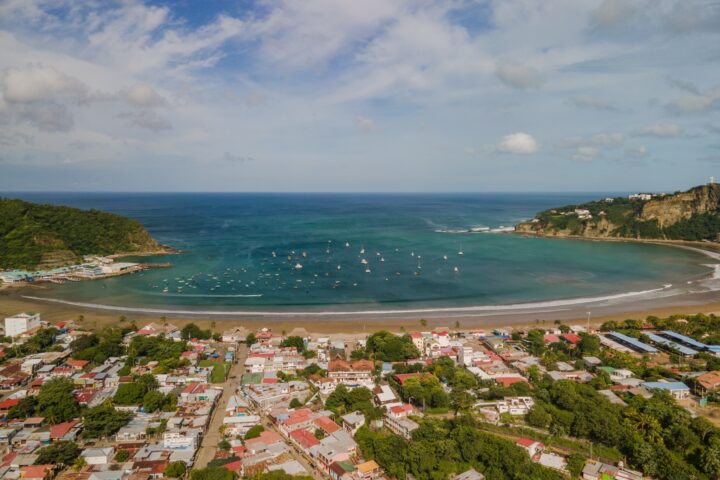
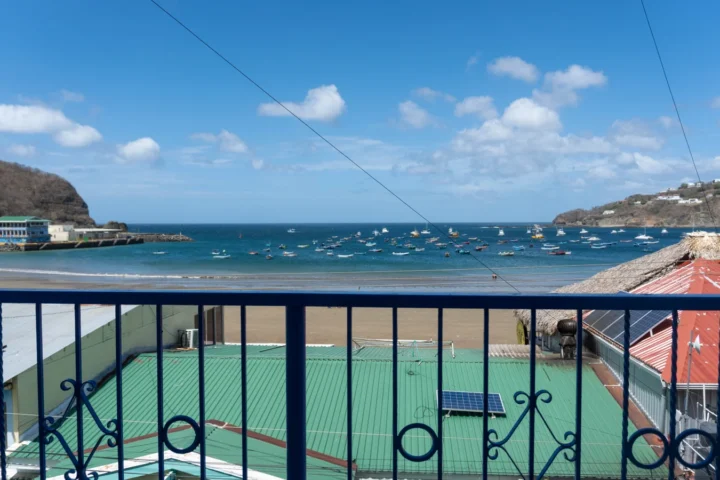
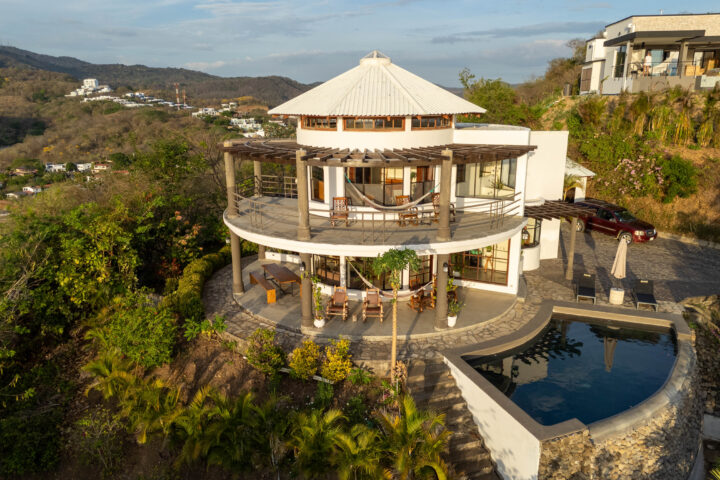
Earnest funds: $1,000 USD. Required to submit an offer. Refundable if no agreement is reached; applied toward the purchase if you close. This keeps the process serious on both sides and protects everyone’s time.
Additional Frequently Asked Questions
Purchasing as an Individual vs. a Corporation (Sociedad Anónima, S.A.)
Whether to buy property in Nicaragua under your personal name or a corporation depends on your intended use of the property and your overall investment goals. The best thing you can do is sit down with a real estate lawyer and discuss your plans. They can give you expert advice on the structure that’s right for your specific circumstances.
How Does the Escrow Process Work?
Protecting your funds during a property purchase in Nicaragua is a top priority — and the escrow process is how we do it. Invest Nicaragua works with a US-domiciled escrow company with dedicated US bank accounts, providing the same level of security and transparency you’d expect in a North American transaction.
The escrow account is governed by the terms and conditions outlined in the purchase agreement, along with a separate Escrow Agreement that clearly defines how and when funds are disbursed. Your funds remain in a regulated US bank account throughout the transaction and are only released when all contractual conditions have been met.
Deposits can be made via international wire transfer or credit card. Your real estate agent and lawyer will walk you through the process and ensure everything is properly documented.
What Currency Are Transactions Conducted In?
All property prices listed on our website are in US dollars (USD), and transactions in Nicaragua’s real estate market typically occur in USD. That said, our escrow service can convert Canadian dollars (CAD) and other currencies to USD for the purchase, and can likewise convert proceeds to other currencies for sellers.
We can also facilitate transactions where the buyer wishes to pay in cryptocurrency. Using a third-party escrow service, cryptocurrency can be converted to fiat currency as part of the transaction. If this is something you’re interested in, let us know and we can walk you through how it works.
Is Title Insurance Available in Nicaragua?
Title insurance as it exists in the United States and Canada is not available in Nicaragua. Instead, the title due diligence conducted by your lawyer serves this function. During the due diligence process, your lawyer will thoroughly investigate the title chain, verify there are no liens or encumbrances, and confirm the property is in good legal standing. This is why selecting an experienced and reputable lawyer is one of the most important decisions you’ll make during the purchasing process.
Nicaragua Real Estate Closing Costs (Fees + Transfer Tax)
The real estate commission is paid by the seller, so that is one expense you do not need to think about.
Closing costs will vary based on the specific terms of the deal and the assessed value of the property, but a general guideline is as follows:
Fixed fees (approximately 3% of the final purchase price):
- 1% — Municipal Income Tax
- 1% — Registration Fee
- 1% — Legal Fee (this can vary slightly based on the law firm)
Please note that the Legal Fee is specifically for creating and executing the closing documents and their recording. The escrow account, title due diligence, optional expedited registration fees, wire fees, etc., are not included in this 1%. You should add approximately $1,000 – $2,000 USD on top of the 1% to cover miscellaneous fees.
Transfer Tax (based on assessed value):
In addition to the fixed 3%, there is a Transfer Tax based on the assessed value assigned by the Nicaraguan Tax Authorities (the DGI — Dirección General de Ingresos) after the closing, or the final price listed in the legal sales document, whichever is higher.
| Property Value (USD) | Transfer Tax Rate |
|---|---|
| $0 – $50,000 | 1% |
| $50,001 – $100,000 | 2% |
| $100,001 – $200,000 | 3% |
| $200,001 – $300,000 | 4% |
| $300,001 – $400,000 | 5% |
| $400,001 – $500,000 | 6% |
| $500,001 and up | 7% |
Example — a $225,000 property:
- Transfer tax (4%): $9,000
- Legal fee (1%): $2,250
- Registration fee (1%): $2,250
- Municipal sales tax (1%): $2,250
- Miscellaneous allowance: ~$1,000
- Total: ≈ $16,750 — about 7.4% on top of the price
Before you submit an offer, Invest Nicaragua, with the help of your lawyer, can calculate your estimated closing cost to give you a clear picture of your total investment.
Nicaragua Real Estate Financing & Owner Financing
Financing from local banks is available but is typically only granted to Nicaraguans with existing business relationships with a local bank and involves a rigorous application process. It is extremely difficult for foreigners to acquire a loan from a local bank. Likewise, foreign banks will not usually fund a purchase of a property outside of their home country. Local bank loan rates range from 9% to 12%, depending on the bank, down payment, and the borrower’s financial situation. In practice, Nicaragua generally operates as a cash market.
Owner financing, where the owner acts as a bank or note holder, is available on a case-by-case basis. Typically, owners prefer a minimum of 50% down with the outstanding principal paid over the next year. Interest rates vary based on the deposit and final price agreed upon between the two parties.
If you’re pursuing owner financing, the most important thing is that you clearly understand your own financial situation: how much you can put down, what you can comfortably pay monthly or annually, and whether you have a backup source of income if life changes. On the other side, the seller decides how much cash they need to hand over possession and how much of the balance they’re willing to finance.
A typical structure is 50% down, with possession within 30 to 45 days of executing the Private Sales Agreement — once terms are agreed and the 10% deposit is in escrow. But structures are flexible. On a $300,000 piece of land, for instance, a buyer might put $100,000 down (or less) and pay $40,000–$50,000 a year against the balance. Almost any structure is possible if both parties want to make it work, though sellers generally want as much cash up front as possible and a short term, usually one to two years, for the balance.
On rate: Nicaraguan banks charge roughly 9–12%, while U.S. rates currently sit around 6–7%. An owner-financed rate here often lands somewhere in between — or it may simply be 5%. It depends on the down payment, how quickly the balance is paid, and how motivated the seller is. For sellers, offering financing opens up a much wider pool of buyers — many people from North America and Europe are used to buying on credit, and plenty who could pay all cash would rather not tie it all up in one purchase.
Buying Nicaragua real estate via a self-directed IRA is also an option if you plan to use the property for investment purposes.
Cash is king in the San Juan del Sur and Tola real estate market, and it allows you to take advantage of the best opportunities available. To see how property values have shifted and what buyers are paying right now, take a look at our 2025 Market Report. If you are looking for owner financing, first determine what amount you would be able to make as a down payment and what type of payment schedule you can manage. You can use our owner financing calculator to see which properties are potentially within your reach.
What Are Property Taxes Like?
If you’re used to high property taxes in Canada or the United States, you’ll be pleasantly surprised by the low property taxes in Nicaragua.
Property taxes in Nicaragua are paid in arrears. If you pay by the end of March of the current year, you receive a 10% discount — so there’s an incentive to pay early. To put it in perspective, property taxes for an individual home rarely surpass $1,000 per year.
What About Rental and Property Management?
A common concern for first-time buyers is who will take care of their property when they’re not physically in Nicaragua. Fortunately, there are a variety of rental and property management options for owners who cannot or do not want to be hands-on with their property.
Local rental and property management companies can handle all aspects of operating your property in your absence: acquiring renters, handling check-in and check-out, managing communication, paying employees (caretaker, pool maintenance, gardener, etc.), paying bills, and supervising repairs and maintenance.
Property management typically costs approximately $100 – $150 USD a month, while rental management is generally 20% – 30% of produced income. Discounts are typically available when a single provider handles both services.
Is Property Insurance Available in Nicaragua?
Property insurance is not legally required in Nicaragua, but it is available and highly recommended. Several local providers offer home insurance, including Banco Lafise, Seguros América, and ASSA, among others. Some are banks and some are independent insurers, but all provide coverage options for homeowners.
One of the pleasant surprises for foreign buyers is how affordable insurance is here compared to North America. As an example, a $350,000 home may pay approximately $150 to $250 per month for insurance, depending on the type and level of coverage. Your real estate agent or property manager can help connect you with a reputable provider based on your property and needs.
What Are the Tax Implications for Foreign Owners?
Tax implications for foreign property owners in Nicaragua are best discussed with a tax professional in your home country. In most cases, the purchase is being made with funds from abroad, and when the property is eventually sold, the proceeds may need to be reported to your home country’s tax authority. For example, a buyer from New York who purchases a property in Nicaragua and later sells it would likely have reporting and tax obligations in the United States when those funds return to a US bank account.
For buyers who plan to live in Nicaragua — or who work remotely from here — it’s worth noting that Nicaragua does not tax foreign-sourced income. Income earned outside of Nicaragua is not subject to Nicaraguan taxes, even if you are a resident.
Regarding capital gains on the sale of a property in Nicaragua, the Transfer Tax referenced in the closing costs section above is the mechanism through which this is handled. While the Transfer Tax is legally the responsibility of the seller, in practice in San Juan del Sur and Tola, the buyer typically assumes this cost. This is because the tax amount is calculated and assessed after the sale occurs as part of the property registration process. This dynamic tends to be cyclical — when you buy, you pay the Transfer Tax; when you eventually sell, your buyer pays the Transfer Tax on that transaction.
Your real estate agent and lawyer will walk you through how this applies to your specific deal so there are no surprises.
How Do I Set Up Utilities After Closing?
Utility setup after closing is very straightforward. Once the closing occurs, the buyer takes their legal closing documents to each utility provider to transfer service into their name.
For electricity, you visit the local power company with your closing documents to transfer the account. For internet, the current plan can either be transferred to your name or canceled so a new plan can be established. For water — whether it’s municipal or provided by a development — the process is similar: present your ownership documentation and the account is transferred.
This is all part of the standard post-closing process, and your lawyer, property manager, or Invest Nicaragua can assist with getting everything switched over smoothly.
How Long Does the Entire Process Take?
The timeline varies depending on the specifics of the deal, but here is a general guideline:
Once we receive the $1,000 earnest funds deposit and submit an offer, negotiations typically take a week or less. From there, it usually takes 3 to 5 days to draft, review, and fully execute the Private Sales Agreement. Once the purchase agreement is signed, closing is typically within 30 to 45 days — and that timeframe will be established in the agreement itself.
Certain deals may require a longer timeline. For example, properties located within 200 meters of the coastline require a Certificate of No Objection (CONO), which takes 12 to 18 months to obtain through the PGR (Procuraduría General de la República). Because the approved cadastral survey is part of registration, a coastal purchase within 200 meters of the water is effectively a 12-to-18-month closing, structured around a Promesa de Venta — see “Buying Coastal Property in Nicaragua: The Certificate of No Objection (CONO)” below. For a standard, non-coastal deal, from offer to closing you’re looking at approximately 45 to 60 days.
After closing, property registration takes an additional 2 to 4 months, which your lawyer handles on your behalf.
Common Mistakes to Avoid When Buying Property in Nicaragua
After more than a decade of helping foreign buyers navigate this market, we’ve seen the same mistakes come up time and again. Here’s what to watch out for:
Skipping the escrow account. Sometimes buyers try to save a little money by not using an escrow account, and that creates unnecessary risk. An escrow account provides the highest level of security for both the buyer and the seller — it’s a secure third party holding the funds, governed by the terms of the Private Sales Agreement. You don’t want your money in the hands of a seller before you have all the documentation you need, or sitting in a lawyer’s personal bank account instead of a proper escrow account.
Rushing the process or skipping steps. Whether it’s an overzealous seller, a lawyer trying to fast-track things, or simply a false sense of security, we sometimes see buyers try to do things out of order or skip steps entirely. That’s when problems arise. Follow the process: use an escrow account, sign a Private Sales Agreement so all terms are known by both parties, get all seller documentation, verify that taxes are current and there are no liens on the property. You don’t want to be sending money with a promise that missing documents will show up later.
Going direct without a licensed agent. The biggest pitfall we see is buyers who think that by going direct — without a real estate agent — they’ll save money or get a better deal. This is a different market, a different language, and a different culture. A licensed real estate professional who knows the market, the properties, the lawyers in town, and the bad actors can guide you to a successful transaction. This is not a market where you want to test your skills or shoot from the hip.
A seasoned agent brings below-the-surface knowledge that is simply impossible to recreate if you’re new to the market. They can tell you which areas, which developments, and which types of properties match your criteria — and equally important, which ones to stay away from. You want someone who has been through the buying and selling process not only with dozens or hundreds of clients, but personally as well. That depth of experience is what protects your investment and ensures you’re making fully informed, well-guided decisions.
How Does Title Due Diligence Work in Nicaragua?
Once your deposit is in escrow, your lawyer begins due diligence — the single most important safeguard in a Nicaraguan property purchase. Because Nicaragua doesn’t offer title insurance the way the U.S. and Canada do, this investigation is what protects you.
Your lawyer thoroughly reviews the documents that make up the seller’s file, starting with the title registered in the land registry office, and confirms whether there are any liens, encumbrances, or clouds on the title. Alongside the title, they’ll typically request the Historia Registral (the property’s full registry history), the Plano Catastral (cadastral survey), the Plano Aprobado (approved survey), the Provado, and fiscal tax solvency for the seller or their corporation, as well as municipal tax solvency.
Most issues that surface are curable. A curable item might be back-owed taxes or unpaid HOA dues the seller is in a position to clear before closing. Another common one: a property that once had a loan taken against it, where the loan was paid off but the cancellation was never registered. These are simple to resolve before closing — but only if the due diligence is actually being done. Skip it, and they get missed.
More complex issues are rarer, but we’ve seen them. A title can carry a claim or dispute against it — often within families. Picture a property that belonged to a grandparent; when they passed, the land went to their heirs. If there wasn’t a clearly written will, disputes can arise between siblings over who gets what and how much. So a property the seller believes is entirely theirs may actually be contested by a sibling. Boundaries can be disputed too — you see this more often on larger tracts, where a fence line or a building has, often unintentionally, crossed onto neighboring land.
When a lawyer identifies one of these, the question becomes: is there a cure? If so, the seller can attempt to resolve it. But some issues can’t be cured — or not in a timely or cost-effective way — and in those cases your lawyer will advise you not to proceed. In the 15-plus years I’ve been active in Nicaraguan real estate, we’ve seen a couple of deals where walking away was the right call.
The point of due diligence is simple: you want to know about any obstacle to registering the property before you buy it — not after. The scenario to avoid is completing the compra venta or the Promesa de Venta, and then discovering at registration that there’s an uncanceled lien or a claim from another family member. By then you’ve paid the seller, they may be out of the picture, and resolving it falls to you — which is very difficult.
One last thing worth understanding: many of these issues are completely unknown to the seller. You’re rarely dealing with someone trying to hide a problem — often they simply don’t know, especially with property that’s been inherited or held in a family for a long time, where no one has checked its actual status at the land registry. That’s exactly why this needs to be handled by a lawyer who specializes in real estate transactions.
Buying Coastal Property in Nicaragua: The Certificate of No Objection (CONO)
If you’re buying within 200 meters of the coast, there’s one process you need to understand up front, because it shapes the entire timeline: the Certificate of No Objection, or Carta de No Objeción — we call it the CONO.
Every property within 200 meters of the coastline requires one. It doesn’t matter whether it’s in San Juan del Sur, in Tola, or inside a gated development like Rancho Santana or Pacific Marlin — if it’s within that 200-meter band, a CONO is required.
Here’s how it works. When a new survey is produced as part of the transaction — the survey that puts the property into the buyer’s name — the cadastral office (Catastro) issues a notice that a Certificate of No Objection is required to approve it. That request goes to the PGR (Procuraduría General de la República), and approval typically takes 12 to 18 months. Because the approved cadastral survey is part of registration, a coastal purchase is effectively a 12-to-18-month closing before the title is in your name. That’s simply how coastal transactions work here, and it’s why these deals are structured differently.
We don’t wait for the survey to reach Catastro to see it coming. Working with our topographers and lawyer, we know roughly where that 200-meter line falls, so we can flag early when a CONO will be required and structure the deal accordingly. A few common structures:
- For land: the buyer usually places a minimum into escrow — anywhere from 10% to 50% of the price — while the CONO is pursued. Even when the buyer isn’t taking possession, a seller may want 50% down, since they’re taking the property off the market and doing the work to obtain the certificate.
- For a home or condo where the buyer wants possession before the CONO is issued: normal due diligence is completed and the seller meets all their other obligations (often within 30 to 45 days). Knowing the updated survey can’t be finalized until the CONO is in hand, the seller signs a Promesa de Venta (promise of sale) with the buyer. The buyer releases a portion of the price — commonly around 50% — and takes possession, while the seller retains the title. Over the following 12 to 18 months, as the CONO is obtained, the balance is paid — sometimes in full at the end, sometimes on an agreed payment plan, with the full balance generally due once the certificate is issued.
These terms are flexible and agreed between buyer and seller with your broker’s and lawyer’s assistance. The two things to hold onto: a coastal deal is a 12-to-18-month closing, and it will use a Promesa de Venta or similar instrument documenting a sale in process while the CONO is requested.
Because so many of the best properties fall within the 200-meter band, we’ve handled dozens of transactions that require a CONO. The work is simply structuring something that fits both parties, knowing the timeline is long and may need a little flex past 12 or even 18 months. This is where the right broker, lawyer, and team make the difference — we have the framework, the relationships, and the experience to keep a long timeline moving smoothly.
Ready to Buy Property in Nicaragua?
Visit and see it for yourself. The amazing people, stunning views, and unique properties are all reasons why our clients love investing in the San Juan del Sur and Tola real estate markets.
Remember — you don’t have to be a resident or citizen to own property here, and you won’t have to worry about the steep property taxes you’re used to back home.
To start browsing properties that are on the market today, check out Invest Nicaragua. We list a wide variety of properties around San Juan del Sur, Tola, and the surrounding areas. Our team has been helping foreign buyers navigate this market since 2014, and we’re here to make the process as smooth as possible.
For more information on how to buy property in Nicaragua, please contact us.

Guacalito Luxury Oceanview Villa
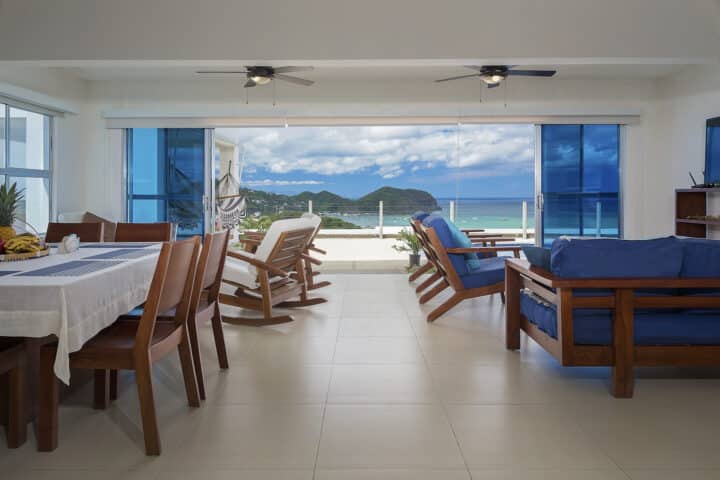
Modern Luxury Oceanview Home
Contact Invest Nicaragua
For more information on how to buy property in Nicaragua.